
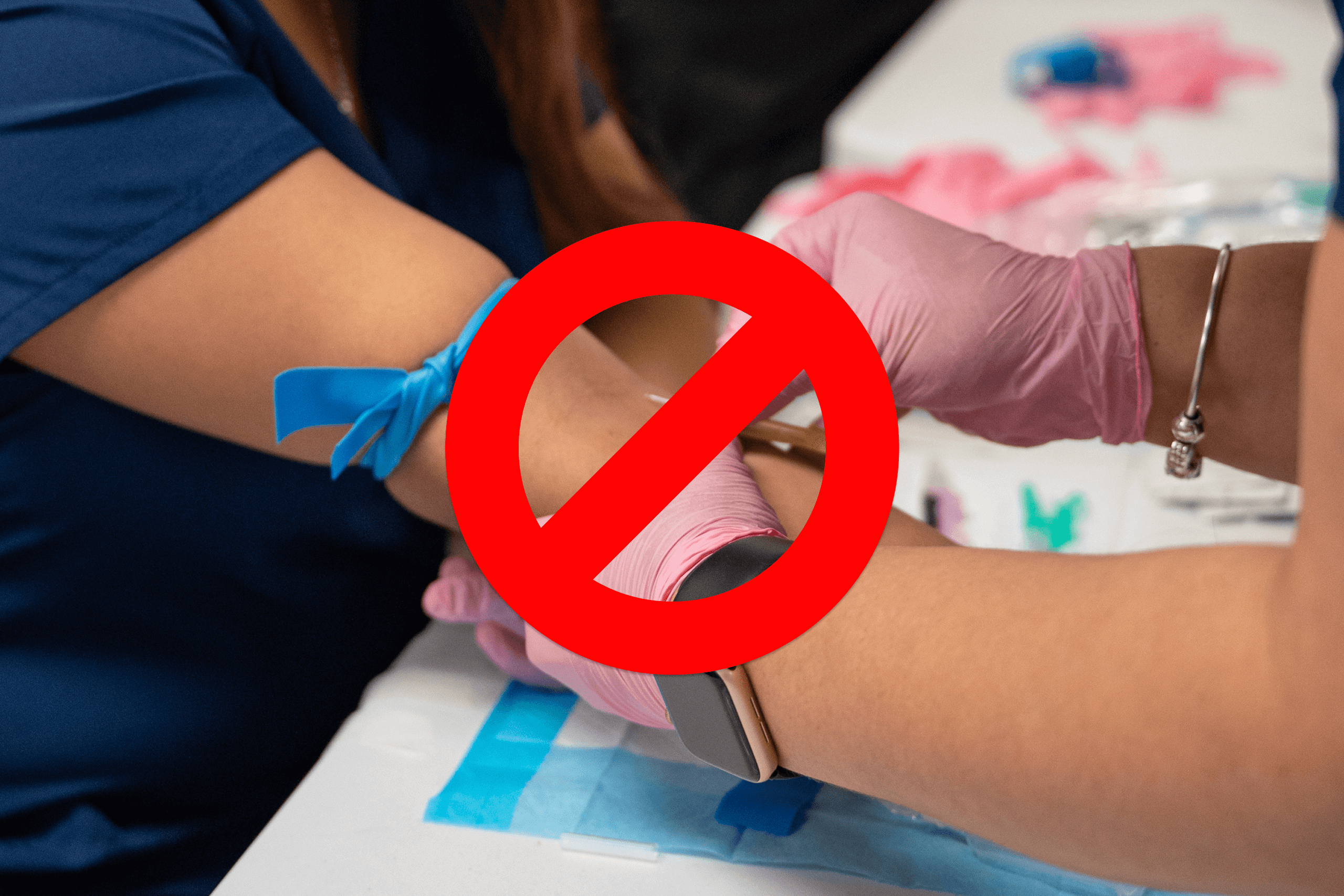
04 Dec Why Beginners Should Avoid the Flying Needle Technique and Stick with Proper Phlebotomy Training
Author: Phlebotomy Training Specialists Team
Helping you build a fulfilling healthcare career—one blood draw at a time.
The world of phlebotomy is always evolving, but not every new technique is suitable for every practitioner. Recently, the “flying needle technique” has been gaining attention on social media. While some experienced phlebotomists claim it allows for faster blood draws, it’s not a method we recommend for beginners—or even for most professionals. At Phlebotomy Training Specialists, we focus on the safest, most effective techniques that ensure both patient comfort and phlebotomist confidence.
What is the Flying Needle Technique?
The flying needle technique is a method circulating online that emphasizes rapid insertion and withdrawal of the needle, often with minimal stabilization. Proponents claim it speeds up venipuncture and reduces patient discomfort, but the technique comes with serious risks if not executed perfectly every time:
- Increased likelihood of hematomas or bruising
- Greater chance of missing the vein or resulting in additional punctures
- Higher risk of patient injury or needle-stick accidents
Unsafe for beginners who haven’t mastered proper vein location and needle control
Why Beginners Should Avoid It
Phlebotomy is a precise, hands-on skill that requires proper technique, training, and experience. For beginners:
- Consistency is key – Learning the fundamentals of vein identification, proper needle angle insertions, and safe handling builds confidence and reduces errors.
- Safety first – The flying needle technique increases the likelihood of complications for both patients and phlebotomists .
- Patient trust matters – A shaky or overly aggressive technique can make patients anxious and impact their overall experience.
At Phlebotomy Training Specialists, our goal is to equip beginners with techniques that are proven, safe, and effective—so every blood draw is smooth, professional, and reliable.
Why the Traditional, Proper Technique is Better
Our approach at Phlebotomy Training Specialists focuses on:
- Vein assessment – Learning to properly palpate and identify veins before inserting the needle
- Needle control and stabilization – Ensuring steady hands for accurate venipuncture and proper anchoring to keep the vein taught.
- Patient comfort – Techniques that minimize pain and anxiety
- Safety protocols – Proper disposal, PPE, and infection control practices
These foundational skills allow new phlebotomists to grow their expertise safely, while experienced practitioners can apply advanced methods only when appropriate.
The Risks of Trying Advanced Techniques Too Early
Even experienced phlebotomists take time to master new approaches. Jumping straight into a high-speed method like the “flying needle technique” without proper training can result in:
- Missed veins and repeated sticks
- Increased bruising or patient discomfort
- Needle-stick injuries and risks of bloodborne pathogens exposure for the phlebotomist
- Potential liability issues in a clinical setting
Starting with proper technique ensures that when you are ready for more advanced methods, you have a strong foundation to build on.
Trust the Experts at Phlebotomy Training Specialists
At Phlebotomy Training Specialists, we teach techniques that prioritize safety, patient comfort, and practitioner confidence. Our courses are designed for beginners to learn phlebotomy the right way—and for experienced phlebotomists to refine their skills under expert guidance.
Your career in phlebotomy starts with the right foundation. Don’t risk shortcuts or social media trends—learn from the professionals.